Friday, 2 March 2018

FERTILIZING CROPS CORRECTLY


Farmers frequently ask us for specific fertilizer for their crops. Dripsol company fraternity would happily oblige if all crops were the same!


How to fertilize a crop correctly


 This can only be done if the organic status and soil life are healthy enough to ensure that recycling of nutrients takes place. Unfortunately, each crop is different because each land is unique. Each land has its own reserve of nutrients and this must be taken into account when determining a crop’s fertilizer requirement. This is why it’s necessary to have the soil analysed. Only once you have these results can you determine how to fertilize according to the specific needs of the crop.

The nutrients in the soil are bound in clay colloids and may not be readily available to the plants due to the soil pH or the action of certain minerals. As a result, the nutrients must first be ‘altered’ chemically or biologically before the plants can use them.

Phosphorous, for example, can be in the form of Iron Phosphate, Aluminium Phosphate or Manganese Phosphate. In any of these states, it is unavailable to plants. Fertilizer companies therefore finely grind rock phosphate and treat it chemically. Applied to a crop, this makes phosphate available to plants. The duration of this availability will depend largely on the soil’s pH. Plants convert the sun’s energy into sugary substances in their leaves and exude these from their roots to supply soil microbes. About 30% of the energy used by the plants goes into feeding microbes, and these in turn make nutrients available to the plant. If we don’t consider the value of a healthy microbial environment in the soil, the plants certainly do!

Organic content also acts as a buffer. A hectare of good soil with a healthy organic content can contain up to 5t of soil organisms. These represent a reservoir of nutrients that are constantly recycled and provide food for plants. A healthy, balanced quantity of minerals in the soil is good for all crops, especially vegetables. Once you have achieved this, you need only ‘top-up’ where necessary, irrespective of the crop.

More soil organisms present in the soil, fewer worries 

The higher the organic content of the soil and the accompanying soil life, the less you need to know about soil fertility and the less important mineral imbalances become. Farmers and fertilizer companies place too much emphasis on establishing the precise quantity of fertilizer to apply to each crop instead of getting the soil properly fertile in the first place. How soon you can achieve this depends on your operation. Field crops do not always have enough of a profit margin for a farmer to fast-track the process but the principles remain the same.


Soil health

 Compost  is  a  mixture  of  dead  plants,  roots  and leaves. If your soil is heavy clay adding compost will help the soil drain water . If your sandy, adding compost will help the soil hold more water. Adding compost brings earth worms and other living things that help plants and roots grow strong and healthy. Vegetable farmers,  have too much to lose by ignoring soil fertility. Focus on improving soil health as soon as possible – by increasing organic content, achieving the correct mineral balance and tilling as little as possible.  As world population and food production demands rise, keeping our soils healthy and productive is of more importance.

Happy Farming,

contact us for drip irrigation quotes sales@dripsol.com  +254 (0) 746-300-055 / +254 (0) 7-3869-0937 


Sunday, 18 February 2018


Challenges facing Onion Farming,

Rains or Excess Watering: Too much rains or excess watering can water log the crop. If the rain in your area is too much, focus on growing the crop during the short rains. You can also raise the beds to ensure the water flows out of the field. Avoid excessive watering of your onions. The best type of irrigation on onions is drip irrigation. Overhead irrigation should be avoided as it causes fungal diseases.

Diseases: Common diseases that affect onions include Downy Mildew, Bacterial Soft Rots, Pink/White Root, Botrytis, and Rusts. Use herbicides to get rid of the diseases.

Pests: Common pests that attack onions include maggots, thrips, nematodes and the leaf miner. Use pesticides from accredited brands to get rid of the pests.

Weeds: Weeds can also destroy your crop and should be removed occasionally either physically or through the use of herbicides. In one season, there should be at least 2 – 3 weeding sessions.

Harvesting onions


The best time to do the harvesting is during the dry season. Keep a calendar and record the essential dates to ensure you harvest at the right time. Bulb onions are ready for harvesting once they form a shiny membranous cover around the bulbs or when the foliage withers. Spring onions are ready for harvesting when they are 15 centimeters tall and 1.5 centimeters thick.

Harvesting is done by pulling the bulbs and then chopping off the leaves. You then dry the bulbs in the sun before storing the produce.

Hope that's all you need to know about growing onions, for any question write to us through sales@dripsol.com,

Thursday, 15 February 2018


Growing Onions!


Half percent of the red onions in Kenya are imported from our neighboring country, Tanzania, as indicated by Food and Agriculture Organisation's (FAO) 2014 report. Kenyan Farmers have been doing their best to address the demand and close the gap, but there is still more supply to be achieved. This makes the Red Bulb Onion a very attractive commercial investment for the Kenyan market at the moment, since local production is not enough.

Major types of onions farmed in Kenya are bulb onions and spring onions. Bulb onions take 3 to 4 months to reach maturity. Spring onions are easy to plant. You can even plant them at your kitchen garden. They are commonly used in vegetable salads or as seasoning in soups. Some of the health benefits of spring onions include lower blood sugar and decreasing blood pressure and cholesterol levels.

Of the two types, bulb onions are more popular than the spring ones due to their long shelf life and sweet taste. Currently, there are two different varieties of bulb onions in the market. There is the small, thin and firmly layered onion that has a strong pungent smell from Tanzania. The second one is the big loosely held variety that is grown locally, in Kenya.

The best areas suited for farming being Karatina, Oloitoktok, Naivasha, Kieni, Emali and Mai Mahiu.

Conditions for Onion Farming

Onions perform well in well drained, fertile, sandy loam, non-compacted soils. The ideal pH is 5.8 to 6.8. Onion farming is a worthy venture since it’s possible to grow onions throughout the year via Drip irrigation. Soil test with accredited laboratories is advised. The ideal temperatures onions need to grow are between 13-35 degrees centigrade. This means that onions can grow in most parts of Kenya. However, to maximize production in dry areas, one needs to invest in a greenhouse and drip irrigation. This is because greenhouses will optimize the temperatures since these areas are hot and irrigation will provide the much needed water.

In terms of requirements, apart from land that is an obvious fact, other requirements are DAP Fertilizer and seedlings. 1 kg of seedlings can be used in 1 acre while 20 grams of DAP Fertilizer is applied per square meter. You should note that there are different seed varieties and they perform differently under different conditions. Common hybrid varieties available in Kenya include Red Creole, Red Pinnoy, Jambar 1 and Red Bombay. The most popular seed variety in Kenya is the Jambar F1 since it produces high yield and the size of its onions are bigger. On our next article we shall be talking about challenges facing Onion growers,


Contact us through sales@dripsol.com

Tuesday, 13 February 2018

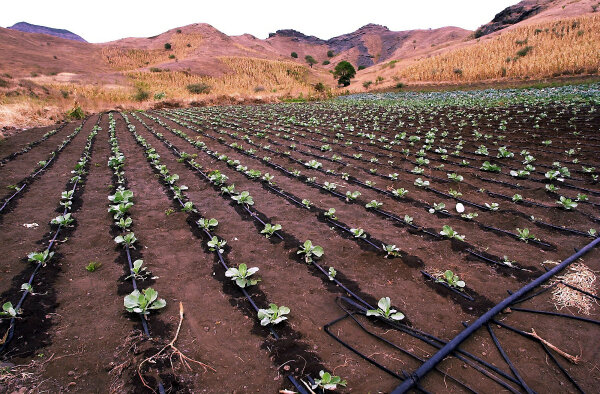
Growing Cabbages with Dripsol


1. GETTING LAND READY.

The first take to any crop growing farmer before planting is doing a soil test and getting the nutrient content right, this is one of the key factors mostly to farmers who intend to grow Cabbages. Soil analysis is often done 'charge free' by your fertilizer supplier or at small fee.  Cabbage can be grown in slightly acidic soil, but it’s always better to try to get as close to a water pH level of 6,5 to 6,8 as possible. If your soil analysis calculates pH on the potassium chloride (KCl) basis, add one point to get the approximate water pH. In other words, a KCl pH of 5,5 would be close to a water pH of 6,5. A pH on the low side is likely to produce a molybdenum deficiency, which makes phosphate less available to the plant. In this case, work very finely ground lime into the soil. Do this well in advance of planting the crop, as the soil takes time to stabilize. Most soils are high in magnesium which should preferably be in balance with calcium. So, like most of our farmers, you will probably need calcite lime
If you are in an area with a low level of soil magnesium, you should use dolomite lime
(Kindly consult agronomists or fertilizer adviser on limes). Cattle and poultry manure benefit microbial life and soil structure, and are excellent for stimulating plant growth.

2.HOW TO WORK THE SOIL

Plasticulture system offers alternative for cabbage producers
After the soil testing, follows the land preparation, the more land is tilled, the faster its structure and organic content breaks down. Rule is to till only as much as necessary to get the job done. Small clods and crumbly soil improve water penetration and be less likely to crust after heavy rain. For the highest yield, space the rows about 60cm apart, leaving the odd row out for the tractor operating the spray rig. This rows can be in form of shallow ridges or on flat ground. We advice use raised beds 1,6m to 1,8m apart (from center to center) if there is a drainage problem; these reduce the chance of standing water damaging the roots. The beds should be angled to remove excess water from the land after heavy rain. Where the soil is well drained, raised beds will reduce yield. This is because the furrows between beds take up too much room, reducing the plant population.
3.IRRIGATION METHOD
Furrow irrigation is suitable where there is sufficient water. Although this method may seem rather primitive, it requires a great deal of skill. Getting the correct fall and distance between feeder furrows to suit the soil type takes experience. Nevertheless, you can get excellent results with lower input costs, that's through modern Drip Irrigation method. The easiest irrigation method, which is very effective and precise, is the Drip irrigation. we welcome all to our trusted company, for designed drip installation. If you are using pipes and sprinklers, opt for the solid set system, where you simply open valves as you need to. All farmers need to cut down on labor as much as possible. 
For customized drip irrigation, don't hesitate to get in touch with us through; +254746300055 / +254738690937 / sales@dripsol.com.     

Tuesday, 6 February 2018


Integrated approach to address the water challenge
There is no silver bullet—no one answer to addressing the global water challenge. But an integrated approach
using the technologies outlined here and tailored to the local conditions, crops, and farmers can maximize water use efficiency. As a result, farmers will not only produce more food but also become stewards of the land, protecting against rain run-off, soil erosion, water stress on plants, flooding, and desertification of arable land. Desertification, which occurs in arid areas from various factors, including climate variation and human activities, degrades land to the point it can no longer grow crops.

To better manage the competing demands for water, agricultural policies will have to make water efficiency a priority. This will require investment in research to develop innovative water-efficient technologies in addition to drought tolerant seeds, new crop protection products, and optimized irrigation systems for specific crops. But the best and most innovative technology is useless if farmers cannot afford it, see no advantage to it, or do not understand it.Water efficiency measures using existing agricultural technology can sustainable increase net water availability, at a reasonable cost. In comparison, trying to increase water supply often requires energy-intensive measures such as desalination, which are vastly more expensive than the efficiency measures outlined.

Enabling individuals and communities to understand their options for managing water, to choose from these options, and to take responsibility for their choices could positively alter the way the world uses its limited water resources.Therefore, a key component of policy-making will have to include infrastructure for knowledge sharing and access to technology. Governments, NGOs, and public-private partnerships should facilitate implementing technology on the farm where better water management is critical for food production and the environment. This includes access to affordable credit and financial risk-management mechanisms, such as insurance for weather-related crop losses. Already the benefits of this model can be seen in partnerships between developed country governments, international organizations, and private companies which are helping small farms with access to finance, guaranteed markets, technical assistance, and insurance.

Engage us with your drip irrigation plans for food security under drip irrigation system.

sales@dripsol.com
+254746300055
+254738690937

Friday, 2 February 2018

In the past, breeders have slowly improved crop varieties by crossing pairs of plants that exhibit desirable qualities. Now this slow and labor-intensive method is getting a helping hand from molecular biology. Researchers are saving time by examining plant DNA for clues to predict which plant crosses are most likely to be successful in producing a given trait. Genetic modification is another tool used to improve seeds in such a way that they can produce the same or more yield with less water.

Today’s crop protection technologies can also help plants use water more efficiently. Some products have a beneficial effect on root systems, allowing plants to make the most of available water and cope better in dry periods. Plant regulator products are designed to help prevent crop loss when plants grow too tall and collapse. They also provide additional benefits by reducing water needed to grow crops. Other products are specifically designed to protect plants from moderate drought and other stresses by blocking the plant’s response to stress which increases the long-term health of plants and improves farmers’ yields.

Contact us  on +254746300055 / +254738690937 or on Sales@dripsol.com to get a customized drip irrigation

Thursday, 1 February 2018

Increasing water efficiency on the farm

Dripsol Company's best option is to implement solutions that have the potential of increasing the efficiency, equity and sustainability of water use. This will require a shift from the focus on pure “land productivity” without concern for water use to “water productivity,” that is, getting the highest yield out of every drop of water used in agriculture. Resource efficient methods and technology will allow farmers to grow more food with less water while protecting biodiversity.
In many parts of the world, mismanagement is depleting freshwater resources—the blue water in rivers, lakes and groundwater stores—which in turn has threatened freshwater biodiversity and permanently changed patterns of water flow. Agriculture utilizes on average 70 percent of the world’s available fresh water. But this is higher in areas such as the Middle East and northern Africa, where up to 90 percent of freshwater withdrawals are used to irrigate crops.

Through Dripsol company modern Drip Irrigation holds the most promise for increasing food productivity and security, provided it is managed efficiently. Steady irrigation combined with optimum delivery of fertilizers, seed care, crop enhancement and crop protection products can make fields more productive, even with a reliable supply of rain and is crucial to maintain productivity in times of drought. More efficient ways to   irrigate land will save tremendous amounts of water. About 40 percent of water used in irrigation is wasted through unsustainable practices such as field flooding. Modern irrigation systems can drastically reduce the amount of water used in farming by efficiently delivering water directly to plants. This reduces the amount of water lost through surface evaporation by 30 to 70 percent depending on crop and weather conditions.

The second part of the equation comes from the rainfall that infiltrates and remains in the soil, called green water. This is the largest fresh water resource and the basis of rain-fed agriculture. While farmers cannot control how much it rains, they can do a lot to retain rain in the soil. All rain-fed agriculture depends on the soil’s capacity to capture rain water. Heavy rain cannot penetrate parched and crusted soil and just runs off the surface.

Even with optimum soil and water management, farmers will still lose crops to drought and heat if they do not have the best seeds and crop protection to carry them through inevitable dry spells.  Researchers have developed new crop varieties which are more water efficient and tolerant to heat and drought through advances in breeding and biotechnology. Modest measures like conservation tillage practices that improve soil structure by avoiding plowing, mulching to prevent evaporation, and small-scale water harvesting can increase rain water infiltration by as much as 2-3 fold. However, the yields from irrigated farms are often higher than from solely rain-fed agriculture. Thus, farmers must integrate a combination of rain-fed and irrigated agricultural methods to optimize the yields of crops for the water used.

Post

Why is diversity so important in the battle with herbicide resistance?

Everyone would like the answers to farming’s problems to be simple, but the fact is, all over-simplistic solutions are prone to coll...